Find All-Terrain Cranes For Sale
All-terrain cranes combine highway travel capabilities with the ability to navigate uneven jobsites. These mobile cranes use multi-axle carriers, all-wheel steering, and telescopic booms to handle heavy lifting across varied work conditions. Construction companies, crane rental fleets, and industrial contractors use them for structural steel erection, equipment installation, and major infrastructure projects.
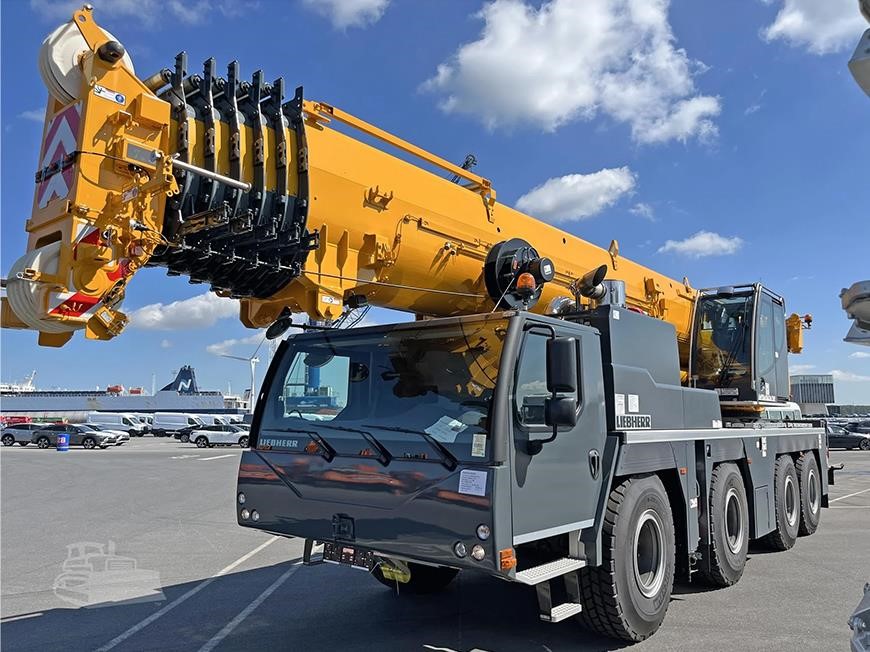
2027 Liebherr LTM 1120-4.1 All-Terrain Crane
Buyers searching for all-terrain cranes for sale can compare lifting capacity, boom reach, axle configurations, and transport requirements to match their operations.
All-Terrain Crane Benefits
- Jobsite versatility: Travel on paved roads and access firm, uneven construction surfaces.
- Heavy lifting: Handle large structural components, industrial equipment, and prefabricated assemblies.
- Efficient relocation: Move between projects without requiring a separate trailer for the crane carrier in many situations.
- Flexible reach: Telescopic booms and optional extensions support lifting at different heights and radii.
- Fleet flexibility: Serve commercial, industrial, and infrastructure projects with one crane type.
All-Terrain Crane Applications
- Commercial construction: Lift structural steel, precast concrete, and building components.
- Infrastructure projects: Support bridge construction, highway improvements, and utility installations.
- Energy operations: Position equipment at power plants, substations, and wind energy sites.
- Industrial maintenance: Install machinery and replace heavy components during scheduled shutdowns.
- Crane rental fleets: Provide lifting services across multiple jobsites with changing terrain and access conditions.
Differentiating Features
- Multi-axle carriers: Driven and steered axles improve traction and maneuverability compared with conventional truck cranes.
- Telescopic booms: Hydraulic boom sections provide adjustable lifting height and reach.
- Outrigger systems: Extendable supports stabilize the crane during lifting operations.
- Operator controls: Load moment indicators, rated capacity limiters, and computerized monitoring assist with safe lifting.
- Road mobility: Highway-capable carriers distinguish these machines from crawler cranes, though travel restrictions may apply.
How To Buy The Right All-Terrain Crane
- Compare lifting capacity: Review rated capacities and load charts at the boom lengths, working radii, and outrigger positions your projects require.
- Evaluate boom configurations: Check telescopic boom length, jib options, and maximum hook height against planned lifting tasks.
- Assess site access: Consider axle count, turning radius, ground clearance, outrigger footprint, and ground-bearing conditions.
- Plan transportation: Verify axle loads, road permits, counterweight transport, and assembly requirements for U.S. and Canadian routes.
- Inspect used equipment: Review operating hours, maintenance records, hydraulic systems, structural condition, and inspection documentation when evaluating used all-terrain cranes.
Top All-Terrain Crane Manufacturers
Explore new and used all-terrain cranes from Demag, Grove, Liebherr, Link-Belt, Sany, Tadano, Terex, XCMG, and other manufacturers. Buyers can compare model configurations, lifting capabilities, equipment conditions, and available listings from dealers and private sellers on MachineryTrader.com.
Get All-Terrain Crane Financing & Shipping
Buyers can explore equipment financing options through CurrencyFinance. For crane transportation and related hauling needs, FR8Star helps arrange shipping services across the U.S. and Canada. Browse all-terrain cranes for sale on MachineryTrader.com to compare equipment suited to your lifting requirements, fleet needs, and project conditions.
 Get Financing
 Rent

