About Pneumatic Compactors
A pneumatic compactor, or pneumatic tire roller, uses rows of smooth rubber tires to not only compact the surface but to seal and finish it, as well. These highly maneuverable machines are often used in road and bridge construction, compacting stabilized soil, and chip and seal work.
In contrast to pneumatic models, combination compactors use a smooth steel drum in the front and one row of compacting rubber tires in the rear to finish the surface. A compactor with two smooth cylinders, or with one drum and a row of non-compacting tires, is referred to as a “smooth drum” compactor. Far different are the tip-studded steel drums used by padfoot compactors on soil and clay and by landfill compactors on piles of waste and refuse.
The Pneumatic Difference
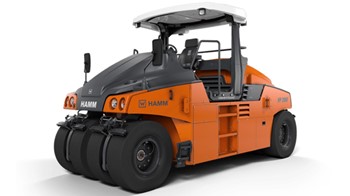
HAMM H280i Pneumatic Roller
A pneumatic compactor’s tires may tilt and move up and down independently, getting down into potholes that a monolithic drum would simply roll over and leave uncompacted. The pliability of the inflated tires is also gentler on aggregate, which can be broken by a hard steel drum roller. A pneumatic roller uses a kneading action between its tires to eliminate most voids and achieve consistent compaction. On asphalt, it can squeeze the oil to the surface for a dark, black finish. A pneumatic roller is often followed by a pass from a steel drum compactor for the sake of smoothness.
Some pneumatic compactors have odd numbers of tires, such as Caterpillar and Sakai models with seven, nine, or 11 wheels. Others have even numbers of wheels, such as BOMAG, Cat, and HAMM rollers with eight tires. Whichever the case, the front and rear tires are offset from each other, allowing their paths to overlap and cover the entire width of the pass.
Features
HAMM of Tirschenreuth, Germany, is said to have invented the first motorized road roller in 1911, a superior diesel-powered alternative to the steamrollers of the day. Smooth rubber-tired pneumatic rollers first appeared as tow-behind compactors in the late 1930s and in self-propelled versions in the early 1950s.
Over the years, manufacturers provided various means for the operator to adjust the weight of pneumatic compactors for the best results with the soil or asphalt mixture, such as by adding water, wet or dry sand, or steel, magnetite, or concrete ballast weights. The inflation level of the tires also affects compacting performance, and so modern models often employ central tire inflation systems to add or release air pressure quickly and easily.
To prevent asphalt from sticking to the tires, many pneumatic compactors include heat skirts or thermal aprons to trap hot air around the tires and maintain their optimum temperature. Various models can also introduce a release agent such as a biodegradable vegetable oil emulsion into the water spray system. Most rollers also use steel or plastic scrapers, brushes, and/or coco mats (vinyl-backed coconut husk fiber mats) to physically keep the tires clean.
Technology is also playing a role in pneumatic compactor development. The U.S. Federal Highway Administration’s “Intelligent Compaction” initiative calls for compactors to be able to measure the stiffness and temperature of the mat, adjust themselves accordingly, and map out the areas they’ve compacted. Technologies such as HAMM Compaction Quality help with planning, measuring, controlling, documenting, and analyzing the compaction process.
Find The Right Pneumatic Compactor
Popular manufacturers of new and used pneumatic compactors available on MachineryTrader.com include Ammann, BOMAG, Caterpillar, Dynapac, HAMM, and Volvo. Some of the most plentiful models for sale include the Cat CW16 and CW34, HAMM GRW280, Ammann AP240, and Dynapac CP2700.

 Get Financing


